Player Modifications Reveal Blends of Logical Deduction and Reflex Competition in Cross-Platform Multiplayer Titles
Written by Jordan Lang · Sep 29, 2026

Player Modifications Reveal Blends of Logical Deduction and Reflex Competition in Cross-Platform Multiplayer Titles
Community modding has expanded notably in recent years as players create custom content that merges deductive reasoning elements with competitive reflex mechanics in titles supporting both desktop and mobile hardware, and data from download analytics in September 2026 shows increased activity around hybrid formats that allow seamless transitions between devices during matches. Researchers at various institutions have tracked these patterns through public repository activity where users upload modifications that introduce puzzle layers into action sequences while preserving real-time competitive elements, and such integrations often appear in free-to-access multiplayer environments that prioritize broad hardware compatibility.
Observers note that modding tools have evolved to support cross-hardware functionality, allowing creators to adjust control schemes for touch interfaces alongside traditional input methods without disrupting the flow of logic-based challenges or reflex-driven confrontations, while aggregated figures from industry reports indicate that titles featuring these modifications experience sustained engagement across regions. Experts from the Entertainment Software Association have documented how player communities contribute to mechanic expansions that blend strategic planning phases with immediate response requirements, and this occurs frequently in arena-style formats where participants switch between devices mid-session.
Patterns in Mechanic Integration Through Modding
Modders frequently develop systems where deductive tasks, such as pattern recognition or resource allocation puzzles, interrupt or enhance standard competitive reflexes like timing-based attacks or evasion maneuvers, and case studies from open-source repositories reveal that these additions maintain balance across platforms by scaling difficulty based on hardware capabilities. Data shows that downloads for such modified experiences surged following major updates in mid-2026, with communities on multiple continents sharing frameworks that enable synchronized progress between portable and stationary devices during multiplayer sessions.
What's interesting is how these trends connect to broader design evolutions, because modifications often incorporate feedback from diverse player bases that test integrations on varied hardware setups, and studies from institutions like the University of Melbourne have examined how such community input leads to refined blends of logic and action that function consistently regardless of screen size or input type. Figures reveal consistent growth in hybrid multiplayer participation, particularly where mods allow teams to solve shared deductive problems while executing individual reflex responses in coordinated events.
Cross-Hardware Accessibility and Community Contributions
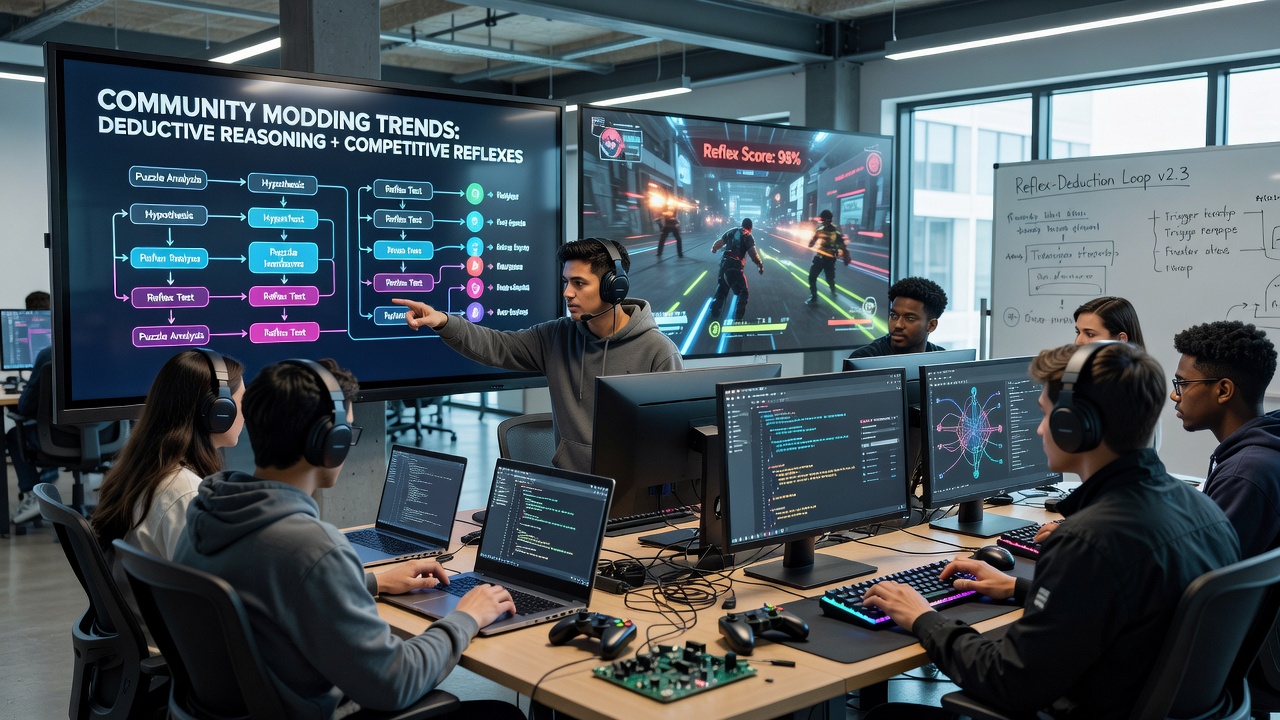
Accessibility remains central as modders prioritize formats that function without specialized hardware, and communities have produced toolkits that translate complex deductive sequences into simplified visual cues suitable for smaller screens while retaining depth for larger displays during competitive play. According to reports from the Canadian Interactive Digital Entertainment Association, these adaptations correlate with higher retention rates in free multiplayer environments, because players encounter fewer barriers when switching between devices and the modded content preserves both reasoning and reflex demands equally.
One notable development involves event-triggered modifications that alter gameplay trajectories based on collective deductive success, which then influences individual reflex competitions, and such systems have appeared in multiple titles since early 2026 with data indicating they promote longer session times across hardware types. Those who've studied repository trends observe that successful integrations often stem from iterative community testing that refines timing windows and puzzle complexity to suit mixed device lobbies, resulting in mechanics that feel cohesive rather than segmented.
Further examination of download patterns shows that titles incorporating community-driven hybrid elements attract participants from varied demographics, and this occurs because the modifications emphasize inclusive design that accommodates different skill levels in both logical deduction and competitive reflexes. Research indicates that synchronized advancement systems, where progress in puzzle elements carries over between platforms, contribute to these trends by reducing friction in cross-hardware multiplayer, and academic analyses continue to map how these features emerge from grassroots modding efforts rather than official updates alone.
Conclusion
Overall, the documented rise in community modding demonstrates clear expansions in how deductive reasoning integrates with competitive reflexes within accessible cross-hardware multiplayer formats, supported by consistent data from download metrics and repository activity through September 2026. Communities continue to drive these evolutions through shared tools and testing protocols that prioritize hardware compatibility, and external analyses from organizations such as the Interactive Games and Entertainment Association in Australia confirm the measurable impact on player engagement across regions. These patterns establish a foundation for ongoing mechanic fusions that connect logical depth with real-time action in free multiplayer experiences spanning multiple device types.